
I’m the creator behind the original walkthrough from 🔥 TOP Digital Products 🔥, and in this post I’ll break down how to get started with the Best Residential Proxy for 2025: proxy4u. Whether you’re trying to bypass geoblocks, automate multiple accounts, or protect your privacy, this guide covers setup, features, pricing, and best practices so you can make an informed decision quickly.
Why choose the Best Residential Proxy?
Choosing the Best Residential Proxy means balancing authenticity, speed, and cost. proxy4u stands out because it offers:
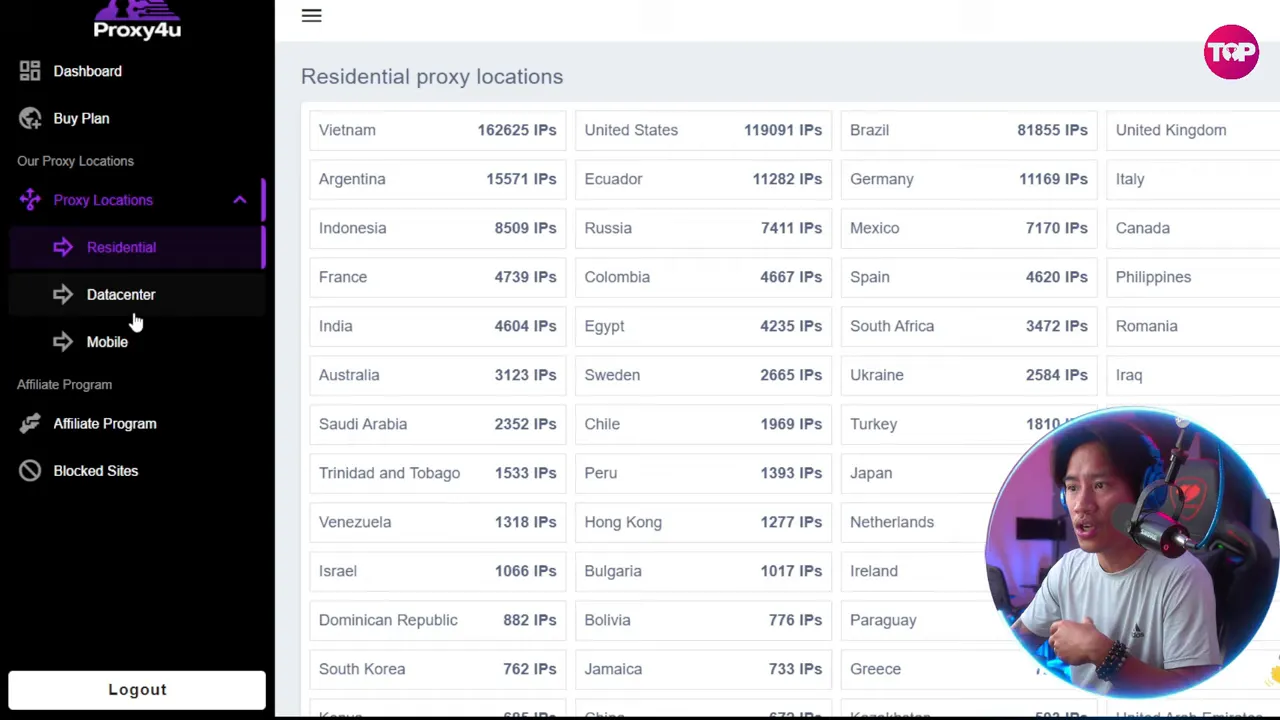
- A large IP pool — over 5 million IPs across more than 195 countries.
- Multiple proxy types: residential, data center, and mobile.
- Session options: rotating IPs for scraping and sticky sessions for account-based work.
- Support for HTTP, HTTPS, and SOCKS5 protocols, making it compatible with browsers, scraping tools, and automation platforms.
- Responsive customer support and clear documentation to get you running fast.
Key advantages at a glance
- Not blacklisted addresses and a high trust score for mobile IPs.
- Intuitive dashboard with usage meters and granular filtering by country, city, and session type.
- Flexible pricing aimed at freelancers and small teams rather than enterprise-only pricing.
Creating your account and navigating the dashboard
Signing up is straightforward: click Start / Get Started, provide the required details, confirm your email, and you’ll land in an intuitive dashboard. The dashboard provides:
- Usage meters and real-time data tracking.
- Proxy selection by country, city, and type (residential, data center, mobile).
- Session control so you can choose sticky or rotating behavior for each task.
Protocols, performance, and use cases
Supported protocols — HTTP, HTTPS, and SOCKS5 — make the service compatible with most browsers, scraping tools, and automation platforms (like browsers and anti-detection tools). Choose your proxy type based on the task:
- Residential: authenticity and lower risk of blocks — ideal for geo-testing, ad verification, and account operations.
- Data center: speed and cost-effectiveness — great for high-volume tasks where absolute authenticity is less critical.
- Mobile: highest trust scores for sensitive tasks that require maximal credibility.
Session strategy:
- Sticky sessions — best for account automation and tasks that require a consistent IP across a session.
- Rotating IPs — best for large-scale scraping and avoiding detection by target sites.
Pricing, trial, and which plan to pick
Pricing is competitive and designed for individual users and freelancers. Typical examples:
- Residential proxies: $2.50 per GB.
- Data center proxies: $1.50 per GB.
- Mobile proxies: $3.50 per GB.
There’s also a free trial available so you can test performance and compatibility before committing. If you’re hunting for the Best Residential Proxy in terms of price/performance balance, these rates make proxy4u a strong contender.
Best practices
- Use sticky sessions for multi-account automation to maintain session continuity.
- Use rotating IPs for scraping to reduce the risk of detection and blocks.
- Monitor usage regularly via the dashboard to avoid unexpected bills and to track performance.
- Always confirm which protocol your tool supports (HTTP/HTTPS/SOCKS5) before configuring.
- Do your own research to ensure the proxy configuration matches your legal and platform-compliance requirements.
Conclusion
If you need a balanced, cost-effective solution for geo-unblocking, scraping, or multi-accounting, the Best Residential Proxy option provided by proxy4u deserves a close look. Its huge IP pool, flexible session options, and clear dashboard make onboarding fast, and the free trial helps you validate real-world performance before buying. For setup, start with sticky sessions for accounts, rotating for scraping, and keep an eye on usage.
For more details and to try it yourself, check out proxy4u and explore their documentation and pricing to see which plan fits your workflow best.


